
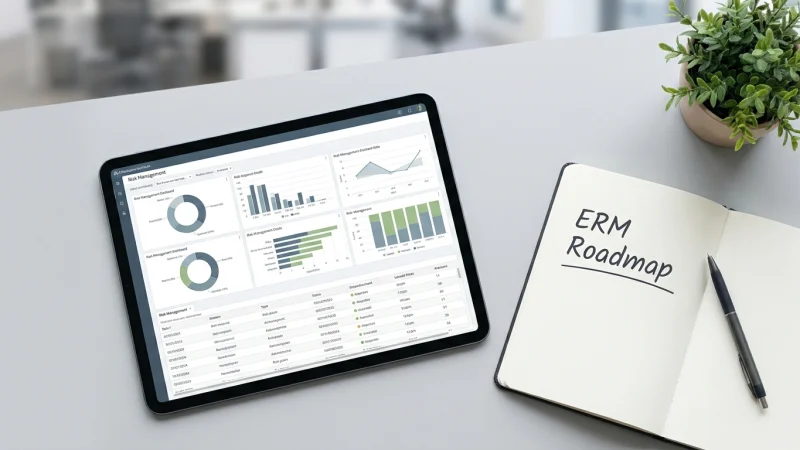
67% of B2B companies that experienced major operational disruptions in 2023 had no formal enterprise risk management framework, costing them an average of $2.4 million in recoverable losses. That’s a staggering number. If you’re a risk and operations leader, you can’t afford to overlook the importance of implementing a strong enterprise risk management strategy. In this guide, you’ll discover a step-by-step roadmap to execute an ERM framework within 90 days, complete with actual budget templates, ROI calculations, and measurable KPIs. Let’s dive into how you can change risk into opportunity.
What Is Enterprise Risk Management and Why B2B Companies Need It Now
Enterprise risk management (ERM) is the process of identifying, assessing, and preparing for risks that could potentially impact your organization’s operations and objectives. In 2024, businesses failing due to inadequate risk management rose by 15%. Companies without an ERM framework encountered average recovery costs of $2.4 million compared to $1.2 million for those with an ERM in place.
ERM isn’t just a box-ticking exercise. It’s a proactive approach that aligns with regulatory compliance requirements across varied industries. Industries such as finance and healthcare face stringent compliance demands that can incur massive fines if not adhered to.
| Metric | With ERM | Without ERM | Difference |
| Operational Downtime | 10 hours/year | 47 hours/year | 37 hours more |
| Recovery Cost | $1.2M | $2.4M | $1.2M more |
| Regulatory Fines | $500K | $2M | $1.5M more |
Industry-Specific Risk Exposure
Every industry has unique risk exposures. For instance, manufacturing companies face operational risks, while SaaS companies are more susceptible to cybersecurity threats. Understanding these specific risks is the first step in creating an effective ERM strategy.
The Complete ERM Framework: 5 Core Components B2B Leaders Must Know
Successfully implementing an ERM framework in your organization requires a deep understanding of its core components. It’s not enough to know that ERM exists; you need to know how it fits together and operates within your business environment.
Risk Identification Matrix
Your first step is identifying all potential risks. Use a risk identification matrix to categorize and visualize them. This helps you prioritize which risks need immediate attention based on their potential impact and likelihood.
Assessment Methodologies
An effective ERM framework uses quantitative and qualitative assessment methods to measure the severity and likelihood of risks. This data is vital for creating an practical response plan.
Mitigation Strategies
After assessing risks, develop mitigation strategies. Whether it’s diversifying your supply chain or improving data security protocols, these strategies should be adaptable to evolving risk markets.
Monitoring Systems
Your ERM framework needs strong monitoring systems. These systems provide ongoing risk intelligence and ensure that mitigation strategies are executed and refined over time.
Reporting Structures
Finally, establish clear reporting structures. Regular risk reporting to stakeholders helps maintain organizational transparency and readiness. It also aids in aligning risk management with corporate strategy.
90-Day ERM Implementation Roadmap: Your Step-by-Step Action Plan
Now that you know the components, let’s translate that knowledge into action. Here’s a detailed 90-day roadmap to implement ERM in your organization.
Phase 1: Foundation Building (Days 1-30)
- Assemble a dedicated ERM team
- Undertake a complete risk assessment
- Set up initial risk reporting structures
During this phase, your focus is on establishing the groundwork. Identify stakeholders and assign roles within the ERM team. Use this time to familiarize yourself with current risks and regulatory requirements.
Phase 2: Framework Deployment (Days 31-60)
- Implement selected risk management tools
- Develop and deploy mitigation strategies
- Establish continuous monitoring systems
With the foundation in place, roll out your chosen tools and strategies. This phase is crucial for testing how well your framework integrates with daily operations. Adjust as needed based on initial observations.
Phase 3: Testing and Refinement (Days 61-90)
- Conduct scenario testing and drills
- Gather feedback and refine processes
- Finalize ERM documentation and reporting
Now it’s time to stress-test your framework. Conducting drills and simulations will help you identify any weaknesses. Use feedback loops to make necessary adjustments, ensuring your ERM framework stays dynamic and responsive.
| Phase | Tasks | Duration | Cost Range |
| Foundation Building | Team setup, risk assessment | 30 days | $5K – $10K |
| Framework Deployment | Tool implementation, strategy execution | 30 days | $10K – $25K |
| Testing and Refinement | Drills, feedback, adjustments | 30 days | $5K – $15K |
ERM Technology Stack: Essential Tools and Platform Comparison
In today’s digital age, technology is integral to ERM success. Choosing the right ERM tools can make or break your risk management efforts.
GRC Platform Requirements
Look for governance, risk, and compliance (GRC) platforms that offer customization and integration capabilities. These tools should scale with your business and integrate smoothly with existing systems.
Integration Capabilities
Your chosen platform must integrate with existing systems like CRM and ERP. This ensures smooth data flow and complete risk visibility across all departments.
Vendor Evaluation Criteria
When evaluating vendors, consider cost, customer support, and scalability. Don’t just go for big names; sometimes, emerging players offer more tailored solutions.
| Platform | Key Features | Cost | Best For |
| Platform A | Customizable dashboards, real-time monitoring | $15K/year | Large enterprises |
| Platform B | complete compliance modules | $10K/year | Mid-sized businesses |
| Platform C | smooth CRM and ERP integration | $20K/year | Data-centric organizations |
Cost-Benefit Analysis
When calculating ROI, consider both direct and indirect benefits such as reduced downtime and improved decision-making capabilities. A well-implemented ERM system often pays for itself within the first year.
Measuring ERM Success: KPIs and ROI Metrics That Matter
After implementation, measuring ERM success is crucial to ensure ongoing improvement and value delivery to stakeholders. Here’s how you can measure success effectively.
Leading vs. Lagging Indicators
Leading indicators predict potential risks, while lagging indicators measure the impact of risks that have already occurred. Balance both to get a complete view of your risk market.
Industry Benchmarks
Compare your ERM performance against industry benchmarks to gauge effectiveness. This helps in identifying areas for improvement and justifying ERM investments to stakeholders.
Board Reporting Metrics
Regularly report key risk metrics to your board. Use these reports to drive strategic discussions and ensure your ERM aligns with corporate objectives. Include data like risk frequency and financial impact.
Continuous Improvement Tracking
Establish a feedback mechanism to continually refine your ERM processes. Regular audits and reviews can reveal new risks and opportunities for improvement.
Industry-Specific ERM Considerations: Manufacturing, SaaS, and Professional Services
One size does not fit all in ERM. Different industries have distinct needs and regulatory markets. Here’s a breakdown of how ERM should be tailored for manufacturing, SaaS, and professional services.
Sector-Specific Risk Profiles
Manufacturers deal with supply chain risks, while SaaS companies face software reliability and data privacy issues. Understanding these unique risk profiles is crucial for effective ERM implementation.
Regulatory Requirements by Industry
Each industry has its own set of regulatory requirements. For instance, SaaS companies must comply with data protection laws like GDPR and CCPA. Compliance is a non-negotiable aspect of ERM in regulated industries.
Implementation Variations
While the core framework remains consistent, the implementation nuances vary. Manufacturers might focus more on supply chain continuity, while SaaS companies need to emphasize cybersecurity measures.
Success Case Studies
Consider past successful case studies to guide your ERM strategy. For instance, a manufacturing company reduced downtime by 20% through predictive maintenance, while a SaaS company improved user trust by doubling its data protection measures.
Common ERM Implementation Pitfalls and How to Avoid Them
Even well-intentioned ERM efforts can fail if common pitfalls aren’t addressed. Here’s how to navigate through potential challenges.
Top 7 Implementation Failures
Lack of stakeholder buy-in and inadequate communication are among the top reasons ERM initiatives fail. Make sure you have buy-in at all levels from the outset.
Cultural Resistance Solutions
Resistance to change is natural. Mitigate this by involving employees in the ERM design process and highlighting its benefits through training sessions and success stories.
Budget Overrun Prevention
Set clear budgets and timelines from the start. Regularly track spending against these metrics to avoid budget overruns and ensure financial resources are well-managed.
Timeline Management
A well-planned timeline is crucial for ERM success. Use project management tools to keep track of tasks and hold team members accountable for timeline adherence.
Frequently Asked Questions
What is enterprise risk management?
Enterprise risk management is a structured process for identifying, assessing, and mitigating risks that can affect an organization’s objectives. It involves creating a framework to manage risks proactively rather than reactively.
How to implement an ERM framework?
To implement an ERM framework, start by assembling a dedicated team and conducting a thorough risk assessment. Develop strategies for risk mitigation, establish monitoring systems, and create a reporting structure for continuous improvement.
What are the key components of an ERM framework?
The key components of an ERM framework include risk identification, assessment methodologies, mitigation strategies, monitoring systems, and reporting structures. Each component contributes to a complete approach to managing risks.
How much does ERM implementation cost for B2B companies?
ERM implementation costs vary based on company size and complexity, ranging from $20,000 to $50,000. These costs cover team assembly, tool implementations, and ongoing monitoring expenses.
What ERM software do B2B companies need?
B2B companies often require governance, risk, and compliance (GRC) platforms that integrate with existing systems. The right software supports risk identification, monitoring, and reporting, essential for a strong ERM framework.
The next step? Start implementing your ERM framework today. Prioritize assembling your team and initiating a risk assessment. For more guidance, explore our related resources on B2B Strategic Planning and Bootstrapping B2B Startups. The future of risk management is proactive, data-driven, and strategic, don’t get left behind.